
Webrinko Research Framework
How We Conducted This Research
This Claude flagship page is a publication placeholder and explicit research framework. The current repository contains no Claude transcript set, source log or measured study results. It therefore does not claim a sample size, query count, citation rate, brand ranking or experiment outcome.
Questions to test
How Claude describes brands, selects sources, cites evidence and changes its answer across commercial query families.
Query design
Category, comparison, alternative, problem-solution, feature, buying-research and direct brand-validation prompts.
Recording protocol
Save the prompt, full answer, mode, model context, date, locale, brand mentions, competitors and every cited URL.
Evaluation
Classify source types, check whether citations support the claim, and compare observations only under matching conditions.
Framework, not a completed quantitative study
Research questions, clearly labelled
Key Findings
No Claude findings are asserted until Webrinko has a reproducible dataset. These cards define the findings the study should earn, the evidence it should publish and the practical questions a B2B SaaS team can prepare for now.
Source selection is a research question
Which pages Claude retrieves for a B2B SaaS query is not yet measured in a Webrinko Claude dataset. The study should record source type, relevance, recency and the role each source plays in the answer.
Citation behaviour needs mode-aware testing
Citations cannot be interpreted without recording whether a response used standard knowledge, web search or Research mode. This page treats mode as a required field in any future observation.
Brand visibility is query-dependent
A category recommendation, competitor comparison and direct brand question ask for different evidence. The framework therefore evaluates visibility by query intent rather than a single universal score.
First-party and independent context both matter to investigate
A future study should separate a company-owned page from reviews, directories, editorial coverage, partner references and research. No source-type advantage is claimed here before that comparison is run.
Repeatability is part of the finding
One Claude answer is an observation, not a ranking. Repeating the same query with its model, mode, date and locale recorded is necessary before Webrinko can describe a recurring pattern.
Mode matters
Current Claude Capabilities: Knowledge, Web Search and Research
Claude responses should be audited according to the capability that produced them. Anthropic documents web search as a way to retrieve current web information with citations, and Research as a multi-search experience that produces cited research responses. Neither should be assumed for every Claude response.
| Claude experience | What to distinguish | Citation handling | Audit use |
|---|---|---|---|
| Standard knowledge | Answers from the model's available knowledge and the conversation context; live web retrieval should not be assumed. | Citations are not inherent to every response. Record when no web tool was enabled rather than treating an uncited answer as a source audit. | Brand descriptions and category associations can be reviewed, but freshness and source provenance remain limited. |
| Claude web search | Anthropic documents a web-search experience that can retrieve current web information when enabled and available. | Cited sources can accompany the response. Capture the exact links and the mode used. | Useful for studying current source discovery and citation context; availability and response behaviour can vary. |
| Claude Research | Anthropic documents Research as a multi-search experience that produces cited research responses. | Expect a research-style response with citations when the feature is available; do not assume every Claude session uses it. | Evaluate the source trail, synthesis and recommendation language separately from a single web-search answer. |
Source selection
How Claude Selects Sources
Claude's proprietary source-selection process is not disclosed here. The useful research question is observable: which sources appear for a recorded prompt, what claim each source supports, and whether the pattern persists when the test is repeated. The cards below are an evidence plan, not predetermined results.
Query relevance
A source-selection audit should begin with the relationship between a query and the page Claude uses to support its answer.
- Finding status
- Research question — Does the cited page answer the commercial or informational need expressed in the query?
- Evidence
- Pending Webrinko Claude study. Record the query, retrieved URL, page type, publication or update signal where visible, and the excerpt that supports the answer.
- B2B SaaS implication
- Write pages that answer one identifiable buyer question directly, while treating relevance as a useful practice rather than a guarantee of retrieval.
Source diversity
A useful answer may draw on more than a company website. The study should make that visible instead of assuming that one source type explains every response.
- Finding status
- Research question — How often do first-party, third-party, review, directory, industry and research sources appear in the same answer set?
- Evidence
- Pending Webrinko Claude study. Categorise every source before drawing conclusions about source preference or cross-source validation.
- B2B SaaS implication
- Build a trustworthy public information layer across owned and independent pages; do not manufacture coverage to influence an answer.
Entity context
Brand names, categories, audiences and use cases can be compared across the sources that Claude presents.
- Finding status
- Research question — Does the description of a brand remain accurate when Claude draws on different public sources?
- Evidence
- Pending Webrinko Claude study. Compare the brand description, product category and use case with the source text; keep the transcript and URL together.
- B2B SaaS implication
- Maintain one accurate, verifiable description across the website and legitimate profiles so buyers and retrieval systems encounter less ambiguity.
Change over time
Claude answers can reflect changing web content, product availability, model versions and enabled tools.
- Finding status
- Research question — Which observations persist when the same prompt is repeated under the same recorded conditions?
- Evidence
- Pending Webrinko Claude study. A repeat log is required; this page makes no claim about a persistence rate or ranking order.
- B2B SaaS implication
- Track sources and descriptions over time, then act on patterns that survive repeated checks rather than reacting to one answer.
Citation behaviour
How Claude Cites Brands and Sources
Citation behaviour should be read as response context, not as proof of a conventional search ranking. In a future Webrinko study, each citation should be checked for source type, first-party or third-party status, relevance to the claim, and its relationship to any brand recommendation.
First-party sources
Record when Claude cites a product page, documentation or company research. Check whether the source supports the specific description.
Independent sources
Record reviews, listings, publications, partners, community pages and research separately. Do not collapse them into one authority bucket.
Multiple-source answers
Note when an answer uses several sources and whether they corroborate, qualify or contradict one another. No cross-source rate is available yet.
Careful language matters: “our observations suggest” belongs next to a published observation; “Claude's algorithm ranks” is not appropriate without primary evidence.
Visibility baseline
How to Audit Your Brand's Claude Visibility
Define commercial query families
Create a stable set of category, alternative, comparison, problem-solution, feature and brand-validation prompts. Keep the intent explicit and record the exact wording.
Record Claude mode and context
Label each test as standard knowledge, web search or Research mode. Also record model/version context, date, locale, account or plan context where relevant, and whether web access was available.
Capture the whole response
Save the prompt, answer, brand mentions, descriptions, competitors, citations and any uncertainty language. Do not count an implied mention as a citation.
Classify every source
Mark each cited URL as first-party, third-party editorial, review or listing, partner, community, research, documentation or another clearly defined type.
Compare without overclaiming
Compare brands and platforms only within the same query set and recorded conditions. A manual audit can reveal gaps; it cannot establish a market-wide ranking.
Repeat and date the audit
Run the same prompts again after a defined interval and note changes in mentions, descriptions and citations. Future Webrinko studies should publish the sample and repeat protocol before reporting results.
| Query | Brand mentioned? | Competitors mentioned | Cited sources | First-party citation | Third-party citation | Notes |
|---|---|---|---|---|---|---|
| Category software for [use case] | Not recorded | Not recorded | Not recorded | Not recorded | Template row — run and date the query | |
| Alternatives to [competitor] | Not recorded | Not recorded | Not recorded | Not recorded | Template row — compare the same prompt over time | |
| Is [brand] suitable for [team]? | Not recorded | Not recorded | Not recorded | Not recorded | Template row — check accuracy and evidence |
Template only. “Not recorded” is intentional: the current repository contains no Claude dataset.
Practical strategy
How to Improve Your Brand's Claude Visibility
These strategies align with a sensible source and citation audit. They do not guarantee that Claude will mention, recommend or cite a brand. Prioritise accuracy, accessibility and evidence over tactics that promise control of an undisclosed system.
Make the public entity record consistent
Use an accurate canonical company name, category, product description and audience across owned pages and legitimate profiles. Consistency supports human understanding and gives a study something concrete to evaluate.
Publish evidence-led answers
Cover the questions buyers actually ask with direct explanations, clear headings, visible authorship and verifiable supporting detail. Citation readiness is a quality goal, not a promise of selection.
Earn independent references
Make genuine customer outcomes, partnerships, expert contributions and relevant coverage easy to verify. Independent context can complement first-party claims, but this page does not claim a guaranteed Claude effect.
Keep access and structure healthy
Review robots rules, page accessibility, internal linking, descriptive metadata and accurate structured data. These are foundations for discoverability, not a disclosed Claude ranking formula.
Measure the gaps that buyers can see
Track whether Claude describes the product accurately, whether the right use case appears, which competitors are mentioned and which sources support the answer.
Turn observations into a research backlog
Prioritise gaps that recur across recorded prompts. Avoid changing copy in response to one answer or presenting a visibility tactic as a guarantee.
B2B SaaS implications
Why Claude AI Visibility Matters for B2B SaaS
Claude can be part of a buyer's research workflow when the task is to understand a category, compare vendors or validate a product fit. For B2B SaaS teams, the useful output is not a vanity mention; it is an accurate public record that helps a prospect move from question to evidence.
Category discovery
A buyer may use Claude to understand a category before naming a vendor. Clear category and use-case language gives the audit a way to check whether the brand is legible in that context.
Comparisons and alternatives
Alternative and comparison prompts expose positioning gaps: what Claude says the product does, who it is for and how it differs from a competitor.
Buying research and validation
When a prospect asks whether a vendor fits a team or workflow, source-backed context may shape the next research step. The practical goal is accurate, verifiable information—not a flattering answer.
Product and competitive research
Teams can use a repeatable audit to identify how their public product story compares with the descriptions attached to peers, without turning an AI response into a market-share metric.
The platform landscape
Claude vs ChatGPT vs Perplexity vs Google AI Overviews
This comparison is about observable answer and source behaviour, not conventional website rankings. Platform capabilities change, and access depends on the product experience, account, query and enabled tools at the time of testing.
| Dimension | Claude | ChatGPT | Perplexity | Google AI Overviews |
|---|---|---|---|---|
| Search / web access | Standard knowledge does not imply live search; web search and Research are separate enabled experiences. | ChatGPT can provide web-search answers in supported experiences; access and citations depend on the mode. | Designed around web retrieval and source-backed answers; exact response behaviour depends on the product mode. | Google Search can show AI features with supporting links; coverage and presentation can vary by query. |
| Citation behaviour | Citations are expected when documented web-search or Research features return sources, not for every Claude answer. | Source links may appear when web search is used; a standard response should not be treated as a citation audit. | Sources are typically presented prominently alongside the answer. | AI features may expose supporting Search sources; the answer format is controlled by Google's experience. |
| Source discovery lens | Study query relevance, source type, entity context and repeatability without asserting a proprietary ranking factor. | Study retrieval context, query wording, answer synthesis and source links. | Study retrieval and citation context in the answer experience. | Study the relationship between Search results, query intent and the AI feature shown. |
| Typical research intent | Long-form investigation, source-backed questions and product or category evaluation when the relevant mode is enabled. | General research, comparisons, validation and assisted discovery. | Research questions that benefit from visible source trails and current web material. | Broad web discovery and questions that remain within the Search ecosystem. |
| B2B SaaS opportunity | Make entity information accurate, publish useful evidence and audit source context by mode. | Maintain discoverable, useful pages and record when web retrieval cites them. | Create clear, well-supported pages and independent references that can be retrieved. | Keep Search fundamentals, topical coverage and structured data accurate. |
Guardrails
5 Mistakes B2B SaaS Companies Make With Claude Visibility
Optimising only the company website
A first-party page is one part of a public information record. Ignoring relevant independent context leaves the audit unable to explain how the brand is described outside its own claims.
Treating third-party presence as a guarantee
A directory, review or editorial mention is not a disclosed recommendation lever. Keep profiles accurate and pursue genuine references; never promise a Claude citation from presence alone.
Publishing generic content with no evidence
Broad claims are difficult for a buyer or a research workflow to verify. Prefer specific, honest explanations, documented outcomes and clearly attributed expertise.
Failing to test commercial queries
A brand can look clear in a direct question and still be absent from category, comparison or use-case prompts. Audit the questions that shape real B2B buying research.
Not tracking mode, citations and competitors
Without mode and date context, answers are not comparable. Record the source trail, brand description and competitor mentions before deciding that visibility changed.
Read before citing this page
Research Limitations
This is an explicit framework and publication placeholder. A completed Webrinko study must state its query selection, sample size, geography, model and version context, web-search availability, personalisation or account context, repeated-query variability and study dates. Claude product behaviour, source indexes and available modes can change, so observations should be re-tested rather than treated as permanent.
Until that work is published, the practical recommendations on this page are cautious operating guidance—not measured Claude outcomes, proprietary-algorithm disclosures or guarantees of brand visibility.
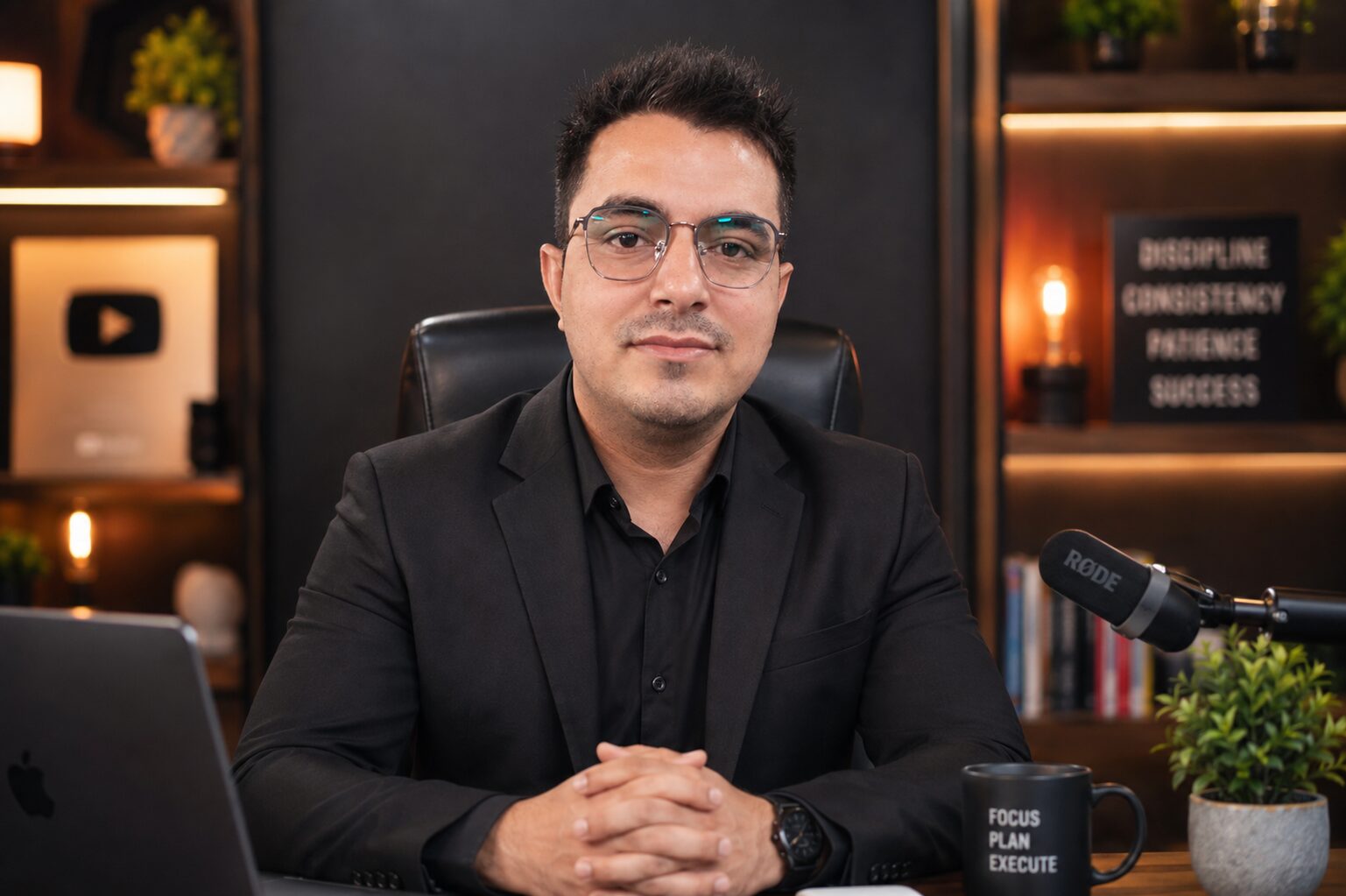
Rinku Dogra
Founder & CEO, Webrinko
Rinku Dogra is the Founder & CEO of Webrinko, an AI SEO consultancy for B2B SaaS companies. This Claude page follows Webrinko's research-library format and keeps the distinction between documented capability, observation and pending study data explicit.
About the authorTurn Claude visibility into a repeatable research habit
Start with a documented query set, source log and accurate public entity record. When Webrinko's Claude study is published, this framework will make its evidence easier to apply.
Request an AI visibility audit